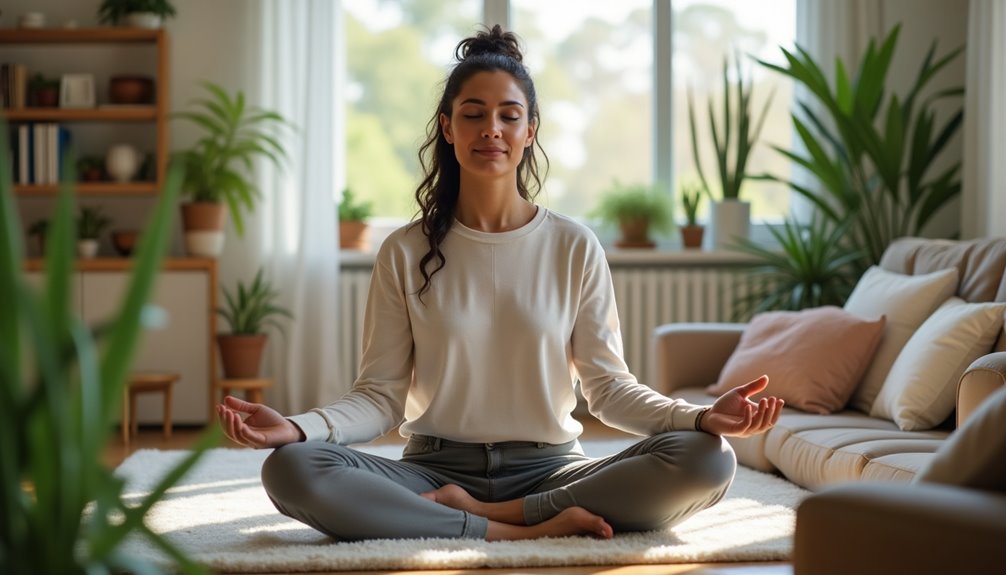
You don't need crystals or hours of meditation to practice mindfulness – it's simply training your attention muscle through proven scientific methods. Research shows just eight weeks of regular practice can reduce anxiety by 30% and improve sleep quality by 42%. Start small by focusing on everyday moments like feeling your feet while walking or noticing the warmth of your coffee mug. These micro-moments of awareness add up, and you'll discover how presence transforms your daily experience.
Quick Highlights
- Scientific evidence shows mindfulness measurably changes brain structure, improving focus and emotional regulation through consistent practice.
- Mindfulness doesn't require emptying your mind or meditation; it's simply paying attention to present-moment experiences.
- Start with simple awareness during daily tasks like washing dishes or walking, treating it as attention training.
- Track progress through concrete metrics like daily mood scores, stress triggers, and improved focus duration.
- Think of mindfulness as mental hygiene rather than spiritual practice, focusing on practical benefits in everyday situations.
The Science Behind Mindfulness: What Research Actually Shows
While many skeptics roll their eyes at the mere mention of mindfulness (I used to be one of them!), the scientific evidence supporting this practice has become too substantial to ignore.
You'll find countless peer-reviewed studies showing how mindfulness literally rewires your brain, boosting gray matter in regions linked to focus, emotional regulation, and stress management.
The research is crystal clear: just 8 weeks of regular practice can reduce anxiety by 30% and improve sleep quality by 42%.
Brain scans reveal that mindful folks have a smaller amygdala (that's your fear center) and a beefier prefrontal cortex (hello, better decision-making!).
Common Myths and Misconceptions About Mindful Practice
As someone who's spent years teaching mindfulness, I've heard every misconception in the book – and let me tell you, they're as persistent as they're wrong.
You don't need to empty your mind (impossible!), sit in lotus position, or chant mantras to practice mindfulness. And no, it's not about becoming emotionless or escaping reality.
Think of mindfulness like strength training for your attention muscle. You're not trying to stop thoughts – you're learning to observe them without getting caught in their current.
It's not about floating away on a cloud; it's about being more present in your everyday life.
Simple Techniques for Developing Present-Moment Awareness
The best mindfulness techniques are often the simplest ones – I learned this the hard way after spending months overcomplicating my practice.
You don't need fancy apps or hour-long sessions to get started.
Try this: Next time you're washing dishes, focus entirely on the sensation of warm water and soap on your hands. That's mindfulness!
Or when you're walking, notice how your feet feel with each step. These micro-moments of awareness build your mindfulness muscle just like reps at the gym.
Trust me, once you start noticing these everyday opportunities for presence, you'll find them everywhere.
It's like discovering a secret world that was there all along.
Measuring Progress: Tangible Benefits for Skeptical Minds
Since many skeptics need hard evidence before buying into any practice, let me share how I tracked my own mindfulness progress – and you can too.
Start by keeping a daily mood score (1-10) and noting your stress triggers. You'll likely see patterns emerge within weeks.
I measured my progress through tangible metrics: reduced heart rate during stressful meetings, fewer anxiety spikes, and improved sleep quality (tracked via my smartwatch).
You can also time how long you maintain focus before mind-wandering kicks in. The data doesn't lie – my attention span doubled in three months, and my colleagues noticed I wasn't constantly checking my phone anymore.
Integrating Mindfulness Into Daily Life Without the Woo-Woo
While mindfulness often gets wrapped up in spiritual jargon and mystical promises, I've discovered you can strip away all that fluff and still reap its practical benefits.
Think of it as mental hygiene – just like brushing your teeth. You wouldn't skip dental care because it originated with ancient practices, right?
Start by bringing awareness to everyday moments: Feel the warmth of your coffee mug, notice your breathing while waiting in traffic, or listen to the sound of typing on your keyboard.
I've found these micro-moments of presence help ground me without requiring meditation cushions or Sanskrit chanting. It's that simple.
Final Thoughts
You don't need to meditate like a Zen master or download every mindfulness app since the invention of the iPhone to experience the benefits of present-moment awareness. Start small – even 5 minutes counts. Whether you're washing dishes or waiting for your morning coffee, you'll find that being mindful isn't about achieving enlightenment. It's about showing up for your life, one breath at a time.