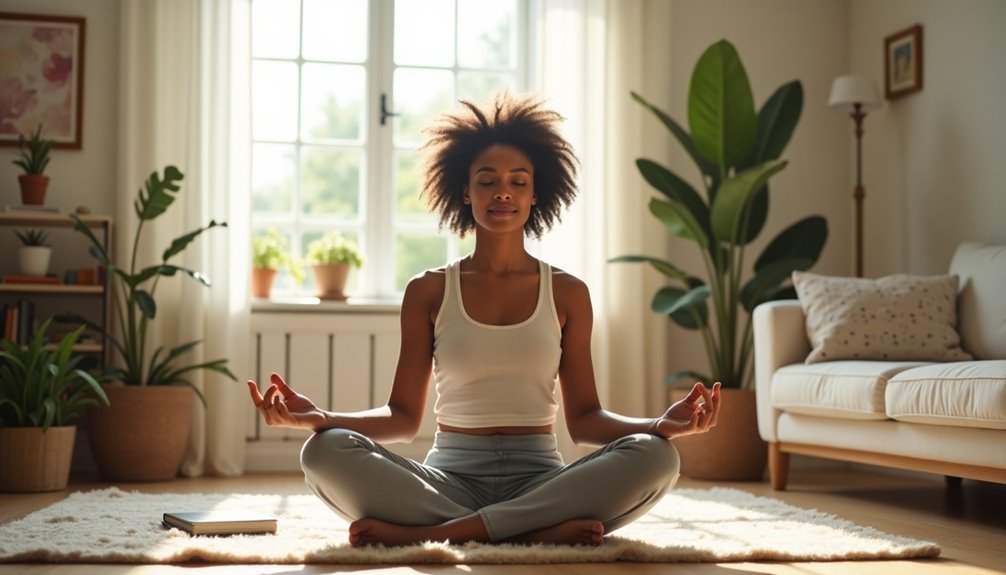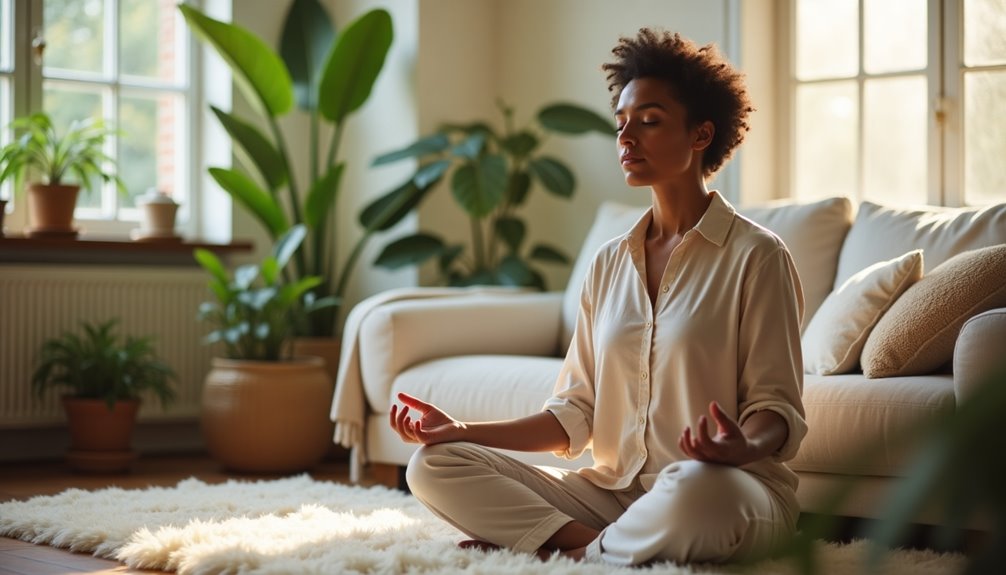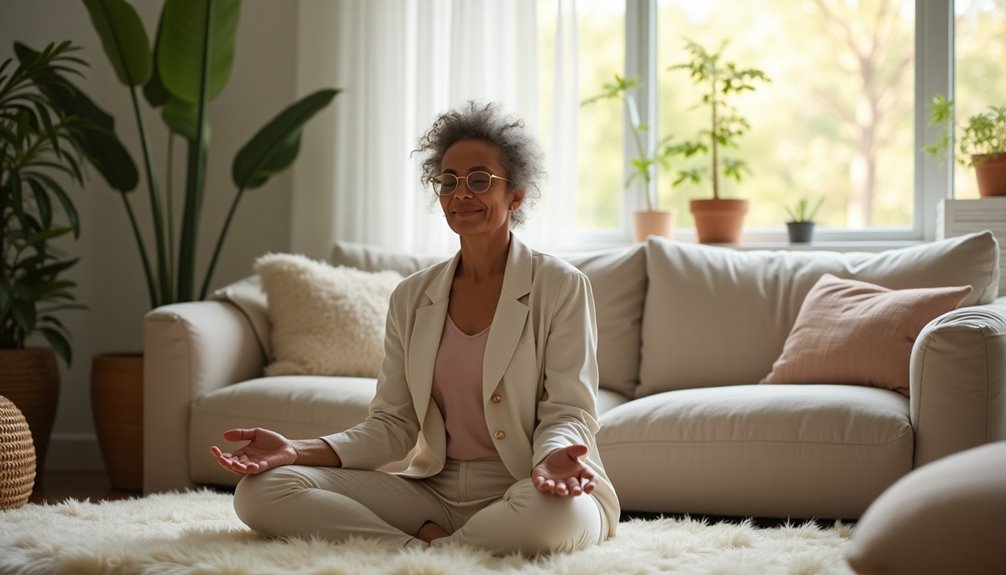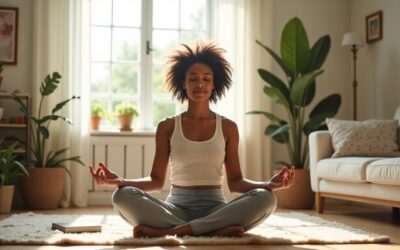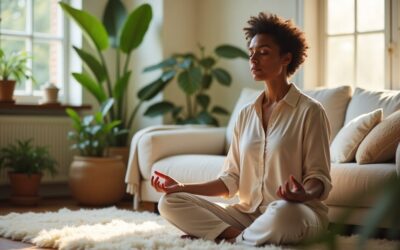
You don't need crystals or chants to meditate effectively – just a quiet spot and 5-10 minutes of your time. Start with simple breathing exercises: inhale for four counts, hold for two, exhale for six. This science-backed practice can reduce anxiety, lower blood pressure, and even increase your brain's gray matter in just eight weeks. Let your thoughts flow without judgment – wandering minds are totally normal. There's a whole world of inner peace waiting beyond these basics.
Quick Highlights
- Meditation is a scientifically-proven practice that increases brain matter and reduces anxiety, without requiring spiritual or religious beliefs.
- Start with simple 5-minute breathing exercises: inhale for four counts, hold for two, exhale for six counts.
- Choose any comfortable position in a quiet space; sitting cross-legged or emptying your mind completely isn't necessary.
- Mind wandering is normal during meditation; simply observe thoughts without judgment and return focus to breathing.
- Consistency matters more than perfection; practice at the same time daily using just a chair and phone timer.
The Science Behind Meditation: What Research Tells Us
While many people still view meditation as a purely spiritual practice, modern science has revealed fascinating insights into how it physically changes our brains and bodies.
You'll be amazed to learn that regular meditation actually increases gray matter in areas controlling attention and emotional regulation (yes, your brain can grow!). Studies show it reduces anxiety and depression as effectively as some medications.
When you meditate, your body's stress response calms down – blood pressure drops, cortisol levels decrease, and inflammation markers improve.
It's like hitting a reset button for your nervous system. The best part? These benefits start showing up after just eight weeks of consistent practice.
Common Myths and Misconceptions About Meditation
Ever notice how many people think meditation means sitting cross-legged for hours with an empty mind?
Let's bust some myths! You don't need to be a monk, wear special clothes, or even sit still for long periods. I used to believe these things too, until I learned better.
Truth is, meditation can be done anywhere (yes, even during your morning commute!), and it's not about emptying your mind – it's about observing your thoughts without judgment.
You're not "failing" when your mind wanders; that's actually part of the practice. Just like any skill, meditation gets easier with time.
Getting Started: Essential Equipment and Environment
Although many people think they need fancy cushions and a dedicated meditation room to start practicing, I learned through years of teaching that the essentials are surprisingly minimal.
You'll just need a quiet spot (even your bedroom works!), something comfortable to sit on (a regular chair is fine), and perhaps a timer on your phone.
The key is finding a space where you won't be disturbed for 5-10 minutes.
I've had students successfully meditate in their parked cars during lunch breaks, on park benches, or in a quiet corner of their office.
What matters most is consistency, not luxury.
Basic Breathing Techniques for Beginners
The simplest path to meditation begins with your breath – it's your built-in tool for instant calm.
Think of it as your personal reset button, always available when you need to center yourself.
- Start by sitting comfortably and notice your natural breathing pattern (yes, you're already meditating!)
- Slowly inhale through your nose for four counts (like smelling a fresh flower)
- Hold that breath gently for two counts (no need to strain)
- Release through your mouth for six counts (as if cooling hot soup)
Practice this rhythm for just two minutes – that's all it takes to join millions of others finding peace through breath.
Three Simple Meditation Methods for Skeptics
When skepticism meets spirituality, most of us want concrete proof before diving into meditation.
Let me share three no-nonsense methods that'll make even the biggest doubters feel at home.
First, try "object focusing" – simply stare at a candle flame or houseplant for 5 minutes. You're training attention, not channeling cosmic energy.
Second, practice "thought labeling" by mentally tagging each thought as "planning," "worrying," or "remembering."
Third, use "body scanning" – systematically notice physical sensations from toes to head.
These methods are rooted in attention training, not mysticism. They're like mental push-ups – practical exercises for a calmer mind.
Tracking Progress and Measuring Results
Measuring progress in meditation might seem as tricky as catching fog in a jar, but I've discovered some practical ways to track your journey.
You'll find these methods help make the intangible tangible, just like I did when I started my practice.
- Keep a mood journal (note how you feel before and after each session)
- Track your daily sitting time (even 5 minutes counts!)
- Monitor physical changes (blood pressure, heart rate, sleep quality)
- Record "monkey mind" episodes (those times your thoughts scatter like confetti)
Incorporating Meditation Into Daily Life
Moving beyond tracking sheets and progress markers, I've learned that successful meditation isn't just about dedicated sitting time – it's about weaving mindfulness into life's daily fabric.
You'll find opportunities everywhere: during your morning coffee (savor each sip!), while washing dishes (feel the warm water), or even stuck in traffic (hello, breathing space!).
I now catch myself practicing mini-meditations throughout my day. When my phone dings, I pause before reaching for it. While my computer loads, I take three conscious breaths.
These small moments add up, creating a mindful lifestyle that feels natural, not forced.
Troubleshooting Common Challenges
Three frustrating roadblocks tend to ambush new meditators: the restless monkey mind, the dreaded meditation fatigue, and that nagging feeling you're "doing it wrong."
I've faced them all (and still do!), so let me share what I've learned from stumbling through these challenges.
- When your mind wanders (and it will!), gently guide it back without judgment.
- If you're falling asleep, try opening your eyes halfway or meditating earlier in the day.
- For posture problems, start with a chair instead of forcing lotus position.
- Remember: even "bad" meditation sessions are strengthening your practice muscles.
Building a Long-Term Practice That Works for You
While mastering meditation's basics is a great start, creating a sustainable practice that fits your lifestyle is what transforms it from a casual hobby into a life-changing habit.
You'll want to start by carving out a dedicated time and space that works with your schedule (morning person? Night owl? It's all good!).
Think of your practice like a favorite coffee shop – make it inviting and comfortable.
Maybe that's a cozy corner with a soft cushion, or perhaps it's your backyard at sunrise.
The key is consistency, not perfection.
When you're building this personal sanctuary, remember: you're not just meditating, you're investing in your long-term wellbeing.
Final Thoughts
You're now equipped to explore meditation without the spiritual baggage, armed with science-backed techniques and practical tools. Whether you're seeking stress relief, mental clarity, or simply a moment of peace, you'll find that meditation isn't about emptying your mind – it's about understanding it. So breathe deep, start small, and trust the process. You don't need to become a guru to reap the benefits of this transformative practice.