Hey there, ready to dive into the artful world of mindfulness?
Embracing presence through art is not just about creating beautiful pieces but also about finding inner peace and self-discovery.
So, grab your brushes and get ready to explore a whole new level of mindfulness through artistic expression.
It’s time to unleash your creativity and connect with the present moment in a whole new way.
Let’s get started!
Selecting a Focus Medium
When choosing a focus medium for artful mindfulness, you should consider both your personal preferences and the specific qualities of each medium. It’s like picking the perfect ice cream flavor – there’s a world of options out there, and each one has its own unique appeal. Exploring different mediums is like going on a flavor adventure, except you’re feeding your creative soul instead of satisfying your taste buds.
Whether it’s the vibrant colors of the painting, the tactile nature of sculpting, or the soothing rhythm of sketching, each medium offers a different avenue for self-expression and introspection.
Finding inspiration is like hunting for the juiciest, ripest fruit in the orchard. It’s about seeking out what makes your heart sing, and your mind dance. Sometimes, inspiration strikes like a bolt of lightning and other times, it’s as elusive as a hidden treasure.
But by exploring different mediums, you open yourself up to a world of inspiration that can spark new ideas, emotions, and perspectives. So, dip your brush into the palette of possibilities and let the canvas of your creativity come to life.
Preparing Your Workspace
Alright, let’s talk about preparing your workspace for some artful mindfulness.
Organizing your tools for accessibility and creating a calming environment is key to setting the stage for your creative journey.
Organizing Tools for Accessibility
To create an accessible workspace for your art practice, start by organizing your tools to allow easy reach and efficient use. Consider using adaptive tools and accessible materials to make your art space inclusive. Get creative with organization – maybe a pegboard for hanging tools or a rotating caddy for easy access.
Labeling drawers or containers can also make finding what you need a breeze. Think about the layout of your workspace. Keep the most frequently used items within arm’s reach and store the rest nearby for easy retrieval.
Creating a Calming Environment
Consider incorporating calming elements such as soft lighting and soothing colors into your art space to create a tranquil environment conducive to mindfulness and creativity.
Picture this: you, surrounded by gentle hues and warm, ambient lighting, feeling as peaceful as a sloth on a sunny day. Ah, the serenity! It’s like a big, cozy hug for your soul.
A calming ambiance can work wonders for your creative flow, like a gentle stream meandering through your mind, washing away stress and leaving behind a clean canvas for inspiration.
So, go ahead and add some plants for a breath of fresh air, or hang up some calming artwork to transport yourself to a peaceful sanctuary.
Creating peaceful surroundings isn’t just about aesthetics; it’s about nurturing your inner artist and creating a space where mindfulness and creativity can thrive.
Engaging in Deep Breathing
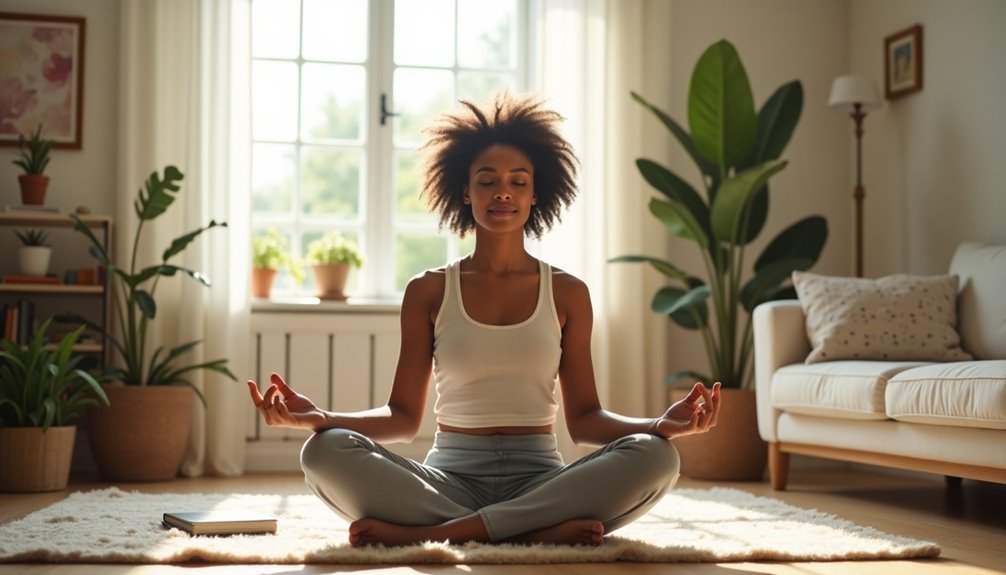
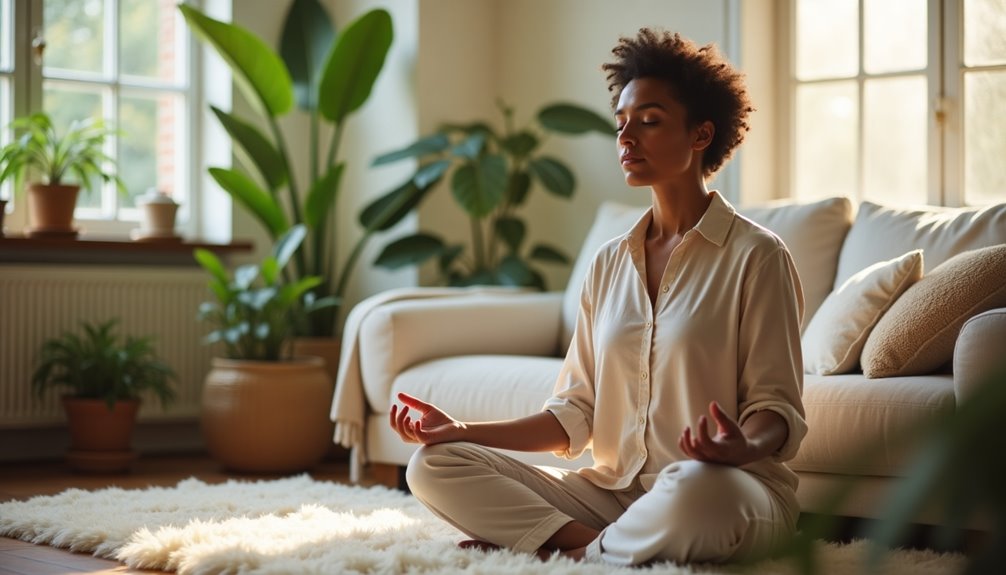
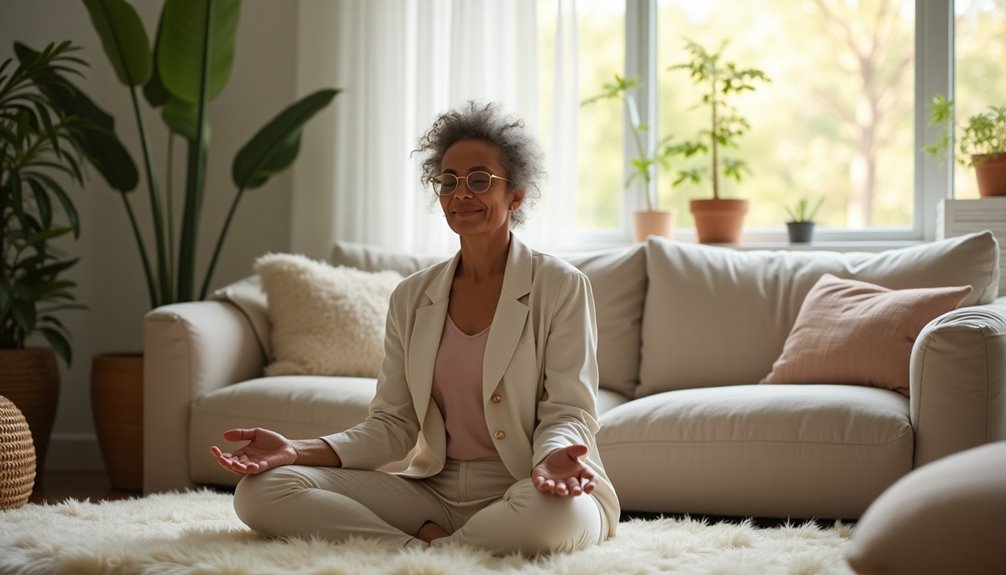
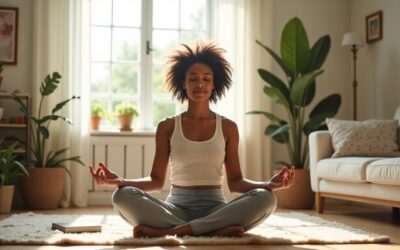
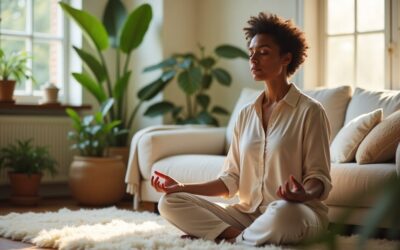
Start your artful mindfulness practice by focusing on your breath. Deep relaxation begins with the simple act of taking a deep breath. As you engage in deep breathing, you’ll find that it not only calms your mind but also helps you connect with the present moment.
Here are some tips to help you engage in deep breathing:
- Find a Comfortable Position: Whether sitting or lying down, ensure you’re in a comfortable position that allows you to expand your lungs fully.
- Inhale Slowly and Deeply: Take a slow, deep breath in through your nose, allowing your abdomen to expand as you fill your lungs with air.
- Exhale Completely: Slowly release the breath through your mouth, ensuring you fully empty your lungs.
- Focus on the Sensation: Pay attention to the physical sensation of breathing. Notice the rise and fall of your chest and the feeling of air moving in and out of your body.
- Stay Present: If your mind wanders, gently bring your focus back to your breath.
Engaging in deep breathing can be a powerful tool in your mindful artistry journey, allowing you to center yourself and fully immerse in the present moment.
Beginning With Intention Setting
As you continue embracing presence through art, begin by setting clear intentions for your mindful creative practice. Setting intentions is like creating a roadmap for your creative journey. It’s like saying to the universe, ‘Hey, I’m ready to embrace creativity; bring it on!’
When you set intentions for your mindfulness practice, you declare, ‘I’m here, fully present, and ready to let my artistry flow.’ Think of setting intentions as planting the seeds of your creative aspirations. You’re not just aimlessly doodling or splashing paint on a canvas; you’re purposefully channeling your energy and focus into your artistic expression.
Whether your intention is to find inner peace, explore a new technique, or enjoy the process, setting clear intentions will guide your mindful artistry. So, take a moment before you begin your creative endeavor. Close your eyes, take a deep breath, and ask yourself, ‘What do I want to cultivate through my art today?’
Embrace the power of setting intentions, and watch how it transforms your creative practice into a meaningful and fulfilling experience.
Immersing Fully in the Activity
Alright, let’s talk about fully immersing yourself in the art-making process.
You know, that feeling when you’re so engrossed in creating that you lose track of time and space?
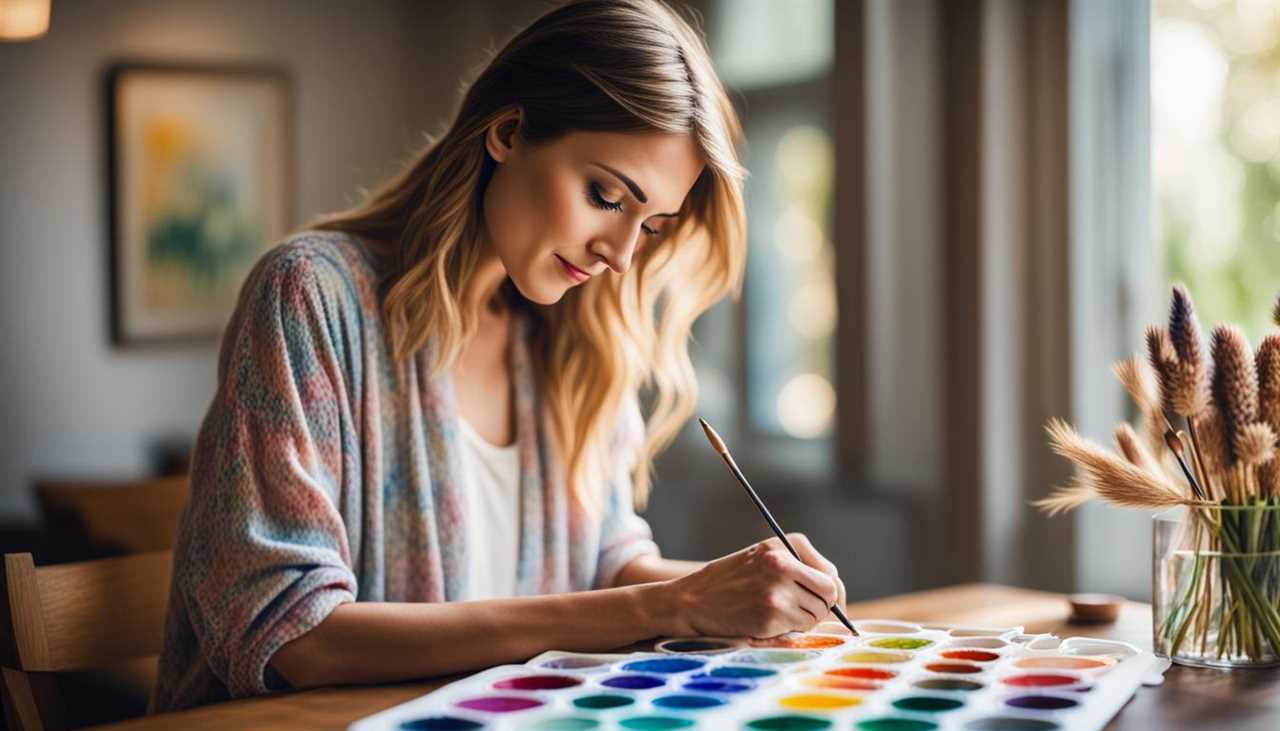
It’s like a magical trance where nothing else matters but the strokes of your brush or the movements of your hands.
Total Engagement in Art
You should consistently immerse yourself fully in the art activity to truly experience artful mindfulness. When engaging in art, give it your all and let the creative process take over. Here are a few tips to help you achieve total engagement in art:
- Lose track of time: Get so absorbed in your art that you forget about the ticking clock.
- Embrace mistakes: See them as opportunities for unexpected creativity.
- Use all your senses: Feel the texture of the materials, smell the paint, and listen to the sounds around you.
- Get messy: Don’t be afraid to dive in and let the paint splatter.
- Be open-minded: Allow the art to speak to you and guide your next move.
Complete Absorption in Creation
To achieve complete absorption in the creation process, immerse yourself fully in the artistic activity. Picture this: you’re knee-deep in mindful art, surrounded by colors, shapes, and textures. Your mind enters a state of creative flow, where time becomes irrelevant, and nothing exists except the canvas and your imagination.
As you swirl your brush, mold the clay, or sketch your vision, you’re completely present in the act of creation. It’s like diving into a pool of inspiration, where worries and distractions melt away. Your focus is razor-sharp, and every stroke or gesture feels like an extension of your innermost thoughts.
Embracing this level of immersion allows you to pour your heart and soul into your art, creating meaningful, authentic pieces that resonate with others. So, dive in, embrace the flow, and let your creativity run wild!
Observing Thoughts Without Judgment
When practicing mindfulness through art, observing your thoughts without judgment is essential, allowing them to come and go freely. It’s like being a curious scientist observing the behavior of your thoughts in their natural habitat.
Here are some tips to help you master the art of observing your thoughts without judgment:
- Be the Watcher: Imagine yourself sitting in a comfy chair, watching clouds of thoughts drift by in the vast sky of your mind. You’re not chasing or swatting at them; you’re just observing.
- Labeling Thoughts: Give your thoughts funny names or assign them colors. This can help you detach from them and see them as passing mental events rather than absolute truths.
- Befriending Your Thoughts: Treat your thoughts like quirky friends at a party. Some are loud and demanding attention, while others are shy and hesitant. Embrace them all without getting entangled.
- Mindful Breathing: When a particularly judgmental thought barges in, take a deep breath and imagine it floating away on a fluffy cloud. Ah, sweet relief.
- Practice Gratitude: Thank your thoughts for showing up, whether they were pleasant or not. They’re doing their best to keep you company.
Using Art to Express Emotions
Expressing emotions through art allows for a release that transcends words or actions. It’s like giving your feelings a colorful, creative voice that doesn’t rely on the limitations of language. When you paint, draw, sculpt, or engage in any form of artistic expression, you’re not just making pretty pictures; you’re delving deep into the well of your emotions and pulling out raw, unfiltered energy.
Exploring symbolism in art can be a powerful way to convey complex emotions. Whether it’s using a specific color to represent a feeling or incorporating meaningful objects into your artwork, the process of assigning meaning to visual elements can help you untangle the web of emotions swirling inside you.
Channeling energy through art is like conducting a symphony of feelings on a canvas. Every brushstroke or pencil mark becomes a note in the music of your emotions. It’s a cathartic experience, allowing you to externalize what’s inside and create something tangible from the intangible.
Frequently Asked Questions
Can Artful Mindfulness Be Practiced in a Group Setting, or Is It Best Done Alone?
In a group setting, artful mindfulness can create a sense of community and shared experience. However, practicing it alone allows for deeper introspection and personal growth. Both approaches have their own unique benefits and can be equally rewarding.
How Can Artful Mindfulness Be Incorporated Into Daily Routines for Busy Individuals?
Struggling to fit artful mindfulness into your busy day? Start by incorporating small moments of creativity, like doodling during a meeting or sketching during your lunch break. Finding time for artful mindfulness is about embracing spontaneity.
Are There Specific Art Techniques or Styles That Are More Conducive to Practicing Artful Mindfulness?
When exploring art styles for mindful techniques, abstract art allows for free expression and emotional exploration. Traditional techniques such as sketching and painting can also cultivate presence and focus through deliberate, attentive strokes.
Can Artful Mindfulness Be Used as a Form of Therapy or Self-Healing, and if So, How?
Artful mindfulness can absolutely be used as therapy and for creative self-healing. By engaging in mindful art practices, you can process emotions, reduce stress, and cultivate a sense of peace and well-being.
Is There a Recommended Duration or Frequency for Practicing Artful Mindfulness to See Its Benefits?
Feeling like a pro, you might think there’s a magic number for practicing artful mindfulness. But hey, it’s more about consistency than time. Daily short bursts are better than marathon sessions for reaping their benefits!
Conclusion
So, grab some art supplies and embrace the artful mindfulness practice next time you’re feeling stressed or overwhelmed. It’s a fun and creative way to bring yourself into the present moment and express your emotions.
Remember, there’s no right or wrong way to do it – just let go and let the art guide you. Who knew that creating art could be so therapeutic? Give it a try and see for yourself!