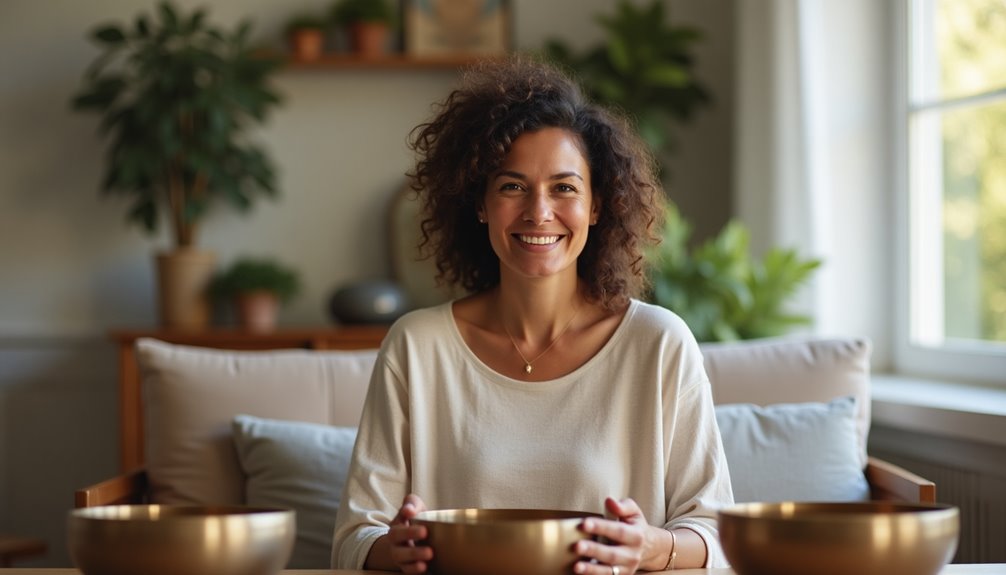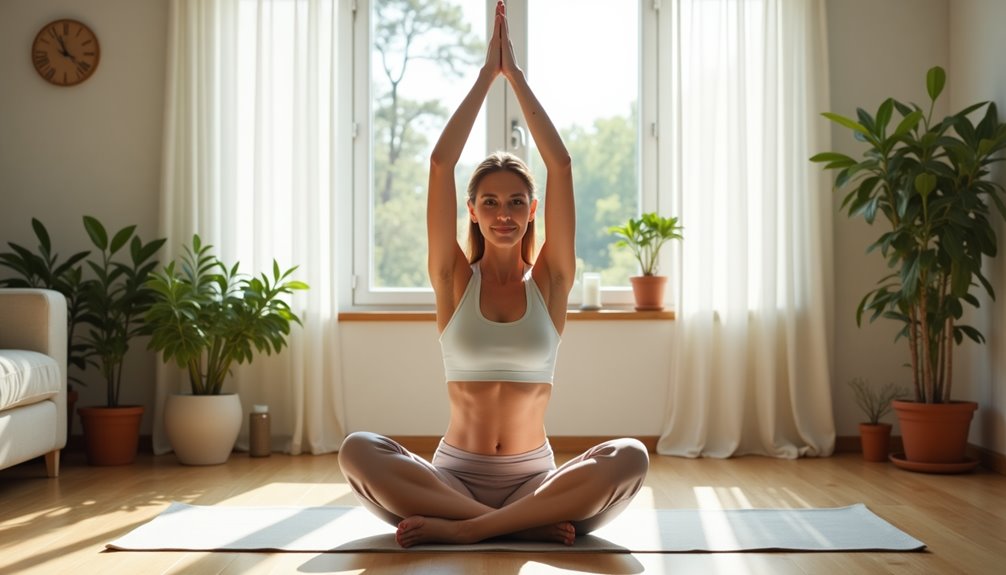
Begin your meditation journey by creating a peaceful sanctuary in your home and starting with simple breathing techniques like the 4-4-4 method. You'll notice your mind becoming calmer as you practice consistently, even if just for five minutes daily. Science shows that regular meditation actually rewires your brain, reducing stress while boosting emotional control and self-awareness. When obstacles arise, remember that every master meditator started exactly where you are – the path to inner calm awaits your first step.
Quick Highlights
- Begin with a dedicated meditation space that feels sacred and peaceful to establish a strong foundation for self-discovery.
- Practice basic breathing techniques like the 4-4-4 method to anchor yourself in the present moment and quiet mental chatter.
- Start with short, manageable meditation sessions and gradually increase duration as you become more comfortable with the practice.
- Accept wandering thoughts as natural occurrences, gently redirecting focus to your breath without self-judgment or frustration.
- Track your meditation journey through journaling to observe personal growth and maintain motivation for continued practice.
Understanding the Science Behind Meditation
While many still view meditation as purely spiritual, the science behind this ancient practice reads like a compelling episode of "CSI: Your Brain."
I've spent years studying how meditation transforms our gray matter, and let me tell you – it's mind-blowing (pun intended).
When you meditate, you're literally rewiring your brain's neural pathways. Think of it like upgrading your mental software!
Scientists have found that regular meditation increases gray matter in areas controlling attention, emotional regulation, and self-awareness. You're not just feeling calmer – you're actually building a stronger, more resilient brain (pretty cool, right?).
Your amygdala – that pesky fear center – actually shrinks with consistent practice, while your prefrontal cortex (hello, decision-making superhero!) grows stronger.
Creating Your Sacred Space
Before you dive deep into your meditation practice, you'll need to carve out a small slice of paradise in your home – and I've learned this the hard way after initially trying to meditate in my chaotic living room with three cats and a TV blaring in the background!
Your sacred space doesn't need to be fancy (mine's just a corner of my bedroom!).
Pick a quiet spot where you won't be disturbed, and make it yours.
Add elements that calm you – perhaps a soft cushion, some crystals, or that peaceful watercolor your aunt painted.
A small side table for incense or a plant can ground your space.
Basic Breathing Techniques for Beginners
The foundation of any meditation practice rests in your breath – it's your anchor to the present moment and your ticket to inner calm.
Think of your breath as a loyal friend who's always there, ready to guide you back whenever your mind wanders.
Start with the "4-4-4" technique (I call it the square breath): Inhale for four counts, hold for four, exhale for four. Simple, right?
Here's another favorite: Ocean breath. Breathe as if you're fogging up a mirror, but with your mouth closed. You'll hear a soft rushing sound, like waves (trust me, it's oddly soothing).
Common Obstacles and How to Overcome Them
Mastering those breathing techniques might sound straightforward, but let's be real – meditation isn't always smooth sailing.
You'll face wandering thoughts (hello, forgotten grocery list!), physical discomfort, and that pesky urge to check your phone.
Don't worry – we've all been there. When your mind drifts, gently guide it back to your breath like you're steering a boat back to shore.
Feeling fidgety? Try adjusting your posture or using a meditation cushion.
And that FOMO from your silent phone? Remember, those notifications will still be there after your practice (trust me, they multiply like rabbits!).
Different Types of Meditation Practices
Just as a well-stocked kitchen offers different ways to nourish your body, meditation presents various paths to feed your mind and spirit.
You'll find mindfulness meditation (my personal favorite!) helps you stay present by focusing on your breath or daily activities. When you're feeling overwhelmed, loving-kindness meditation lets you cultivate compassion for yourself and others.
Can't sit still? Try walking meditation – it's perfect for restless souls like us!
Or immerse yourself in transcendental meditation, where you'll use a personal mantra to reach deeper states of awareness.
Body scan meditation helps you release tension while moving from head to toe (trust me, it's surprisingly powerful).
Building a Sustainable Daily Routine
While many aspiring meditators plunge into their practice with ambitious goals, I've learned that starting small is the secret to lasting success.
You'll find that anchoring your practice to existing habits (like that morning coffee ritual!) makes it stick naturally.
Start with just five minutes daily – trust me, it's perfect for beginners.
Pick a consistent time and spot that feels right for you. Maybe it's that cozy corner by your window or the quiet moments before your family wakes up.
I've discovered that setting reminders on your phone and keeping a meditation journal can transform this new practice into a cherished daily ritual.
Deepening Your Practice Through Mindful Living
Once you've established a consistent meditation practice, you'll discover that mindfulness naturally begins to flow into other areas of your life – I like to call it the "ripple effect."
I've noticed how my own practice has transformed mundane moments, from washing dishes to walking the dog, into opportunities for presence and insight.
You can weave mindfulness into daily activities (yes, even during that boring commute!).
Try bringing gentle awareness to your morning coffee ritual, noticing the warmth of the mug, the aroma, and the way the steam curls upward.
These micro-moments of presence aren't just peaceful – they're gateways to deeper self-discovery.
Tracking Your Progress and Growth
As mindful moments begin weaving through your daily life, you'll want to document this transformative journey.
Think of your progress tracking as building your personal meditation roadmap – there's no "right way" to do it!
Keep a meditation journal (even a simple notes app works!) to record session lengths, insights, and those "aha" moments. You might notice patterns, like feeling calmer after morning sits versus evening ones.
Track your emotional weather – just like you'd check the forecast before heading out.
Don't forget to celebrate small wins. Managed three minutes of focused breathing? That's huge!
Integrating Meditation With Modern Life
Since our modern world moves at breakneck speed, you might wonder how meditation fits into your jam-packed schedule of Slack notifications, endless Zoom calls, and constant social media pings.
Here's the secret: you don't need a mountain retreat to find inner peace. Start with "micro-meditations" – those tiny pockets of time between meetings or during your coffee break.
Take three mindful breaths while waiting for your laptop to boot up, or practice presence while washing dishes (yes, even that can be meditation!).
Transform your daily commute into a mindfulness session. Instead of scrolling through Twitter, notice your breath, the sensations around you, and just… be.
Final Thoughts
You've made it through the meditation journey, and let's be honest – you probably expected to be floating on clouds by now, surrounded by enlightened beings offering you cosmic wisdom. Instead, you're still you, just a bit calmer and more self-aware. That's the real magic though, isn't it? You're not transcending reality; you're finally showing up for it. Keep breathing, keep sitting, and remember: even the Buddha had to deal with mosquitoes during meditation.