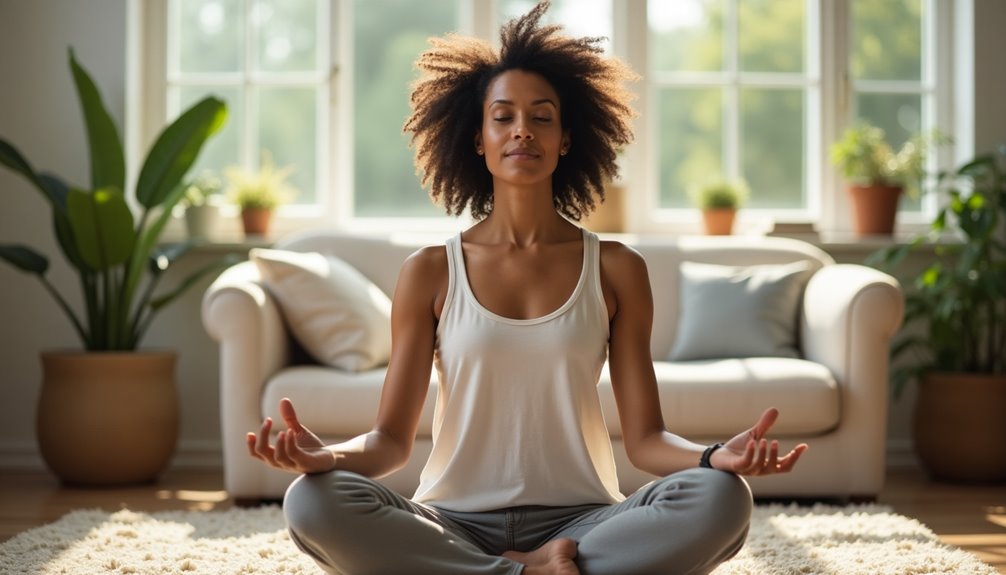
Ancient mindful movement practices like yoga, tai chi, and qigong can transform your path to inner peace. You'll discover powerful techniques rooted in thousands of years of wisdom, from India's dynamic yoga to China's flowing tai chi and energy-focused qigong. These practices aren't just exercise – they're scientifically proven to rewire your brain, boost mood, and reduce stress through intentional breathing and movement. Let's explore how these time-tested traditions can fit seamlessly into your daily routine.
Quick Highlights
- Ancient mindful movement practices like yoga, tai chi, and qigong have proven benefits for connecting body, mind, and spirit.
- Each practice uniquely combines intentional breathing, focused movement, and mental awareness to cultivate inner peace.
- Scientific research shows these practices reduce stress hormones, increase gray matter, and enhance overall mental well-being.
- Beginners can choose between yoga's dynamic movements, tai chi's flowing forms, or qigong's gentle energy work.
- Small moments of mindful movement can be integrated into daily routines for consistent practice and lasting benefits.
Understanding the Ancient Roots of Mindful Movement
While many of us think of mindful movement practices as modern wellness trends, these ancient traditions have been quietly shaping human consciousness for thousands of years.
You're actually tapping into wisdom that's older than most civilizations when you roll out your yoga mat or join a tai chi class.
These practices emerged from diverse cultures – yoga from India's Indus Valley (3000 BCE), tai chi from China's Chen Village (17th century), and qigong from Chinese shamanic traditions (4000 BCE).
They weren't just exercises – they were complete systems for understanding the connection between body, mind, and spirit.
Pretty mind-blowing, right?
The Science Behind Movement and Mental Well-being
When scientists started examining mindful movement practices under the microscope, they discovered something fascinating: these ancient traditions weren't just making people feel good – they were actually rewiring their brains.
You'll find your body and mind working together in powerful ways through:
- The release of mood-boosting endorphins during gentle movement
- Increased gray matter in areas controlling memory and emotion
- Reduced stress hormones like cortisol during practice
- Enhanced neuroplasticity, helping your brain form new connections
It's like giving your brain a gentle massage while your body dances – you're literally reshaping your neural pathways with every mindful step, stretch, and breath.
Key Principles That Unite Yoga, Tai Chi, and Qigong
These ancient movement practices may have developed worlds apart, but they share remarkable DNA at their core.
Whether you're flowing through sun salutations, practicing tai chi's graceful forms, or exploring qigong's gentle energy work, you'll find yourself anchored in three universal principles: mindful breathing (connecting breath to movement), intentional presence (staying fully in the moment), and energy awareness (what yogis call "prana," Chinese traditions name "qi").
Each practice invites you to slow down, tune inward, and find that sweet spot where body and mind sync up.
Think of it as different paths leading to the same peaceful mountain peak.
Choosing the Right Practice for Your Lifestyle
So you're ready to immerse yourself in mindful movement – but which practice will fit your life like a well-worn yoga mat?
Let's find your perfect match by considering your personality and goals.
- If you crave variety and dynamic movement, yoga's diverse styles will keep you engaged.
- When you need gentle, flowing shifts that build balance, tai chi offers graceful progression.
- If you're seeking energy work and stress relief, qigong's focused breathing might be your path.
- For those managing injuries or limited mobility, all three practices offer modifications.
Incorporating Mindful Movement Into Daily Life
Starting a mindful movement practice doesn't mean you need to overhaul your entire schedule or dedicate hours each day to formal sessions.
You'll find countless opportunities to weave gentle movements into your existing routine. Try desk-bound qigong breathing during meetings, or practice simple tai chi hand movements while waiting for your coffee to brew.
I've discovered that even brief moments of mindful stretching (hello, yoga poses during TV commercials!) can transform ordinary activities into mini-wellness breaks.
The key is consistency, not duration. You might be surprised how naturally these practices flow into your day when you stop treating them as separate from "real life."
Final Thoughts
You've spent your whole life rushing from place to place, and now you're learning to slow down through mindful movement – isn't it ironic? While you thought you needed intense workouts to feel accomplished, these gentle practices are actually transforming your mind and body more profoundly. Whether you choose yoga's flowing poses, tai chi's graceful forms, or qigong's healing movements, you're discovering that true strength comes from slowing down, not speeding up.