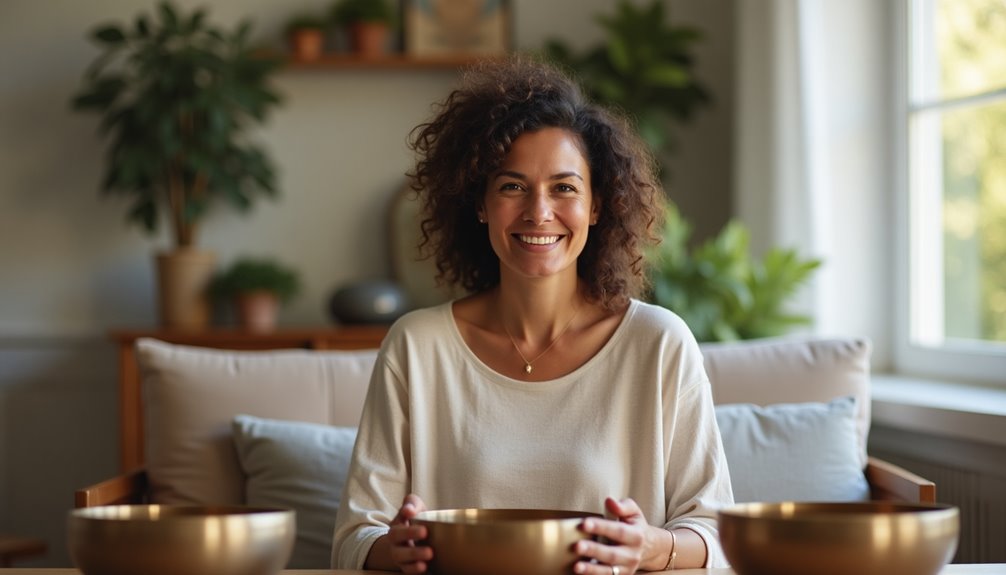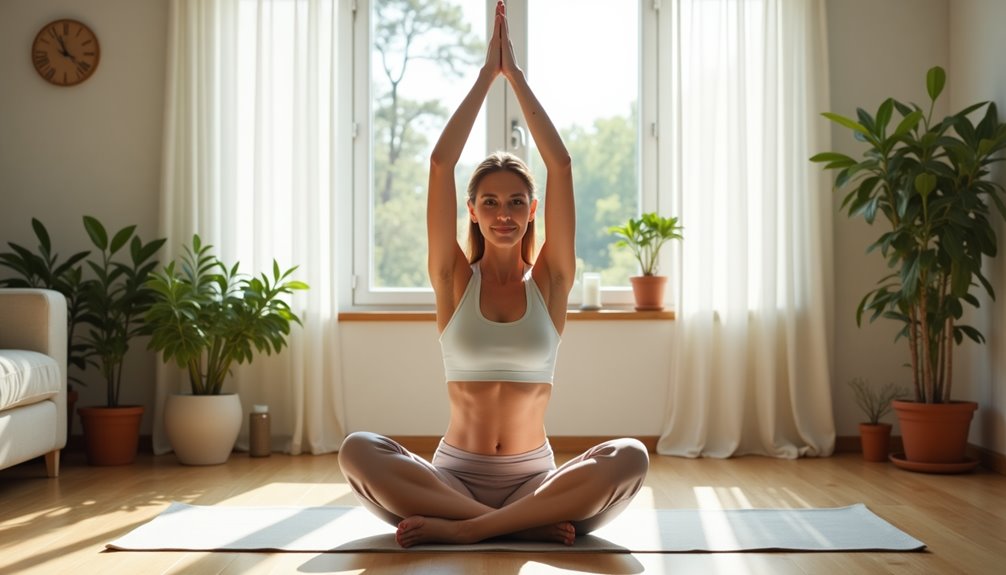
When life feels overwhelming, guided meditation can be your reliable anchor. You'll discover how this scientifically-proven practice creates new neural pathways, helping your prefrontal cortex take charge while calming your emotional responses. By finding a quiet space and focusing on your breath or a soothing visualization, you're actively building resilience against stress. Think of it like settling a snow globe – the more you practice, the quicker your thoughts find their natural rhythm. Let's explore how to make meditation your daily sanctuary.
Quick Highlights
- Choose a consistent physical anchor point like breath, heartbeat, or body sensations to return to during stressful moments.
- Practice gentle body scanning meditation to release tension and ground yourself in present-moment awareness.
- Establish a dedicated quiet space free from distractions where you can retreat during overwhelming situations.
- Focus on calming visualizations that create mental sanctuary, such as peaceful nature scenes or safe spaces.
- Use progressive muscle relaxation combined with breath work to release physical and mental stress quickly.
Understanding the Science Behind Guided Meditation
When you're feeling overwhelmed by life's chaos, it's reassuring to know that science backs up what meditation practitioners have known for centuries – guided meditation really works.
Your brain actually changes during meditation, creating new neural pathways that help you stay calmer under pressure.
Think of your mind as a snow globe – meditation helps those swirling flakes settle down. When you follow a guided practice, your prefrontal cortex (the brain's CEO) takes charge while your amygdala (that pesky worry center) quiets down.
The best part? These changes stick around even after your session ends, just like learning to ride a bike.
Essential Elements of an Effective Meditation Practice
Although setting up a meditation practice might seem intimidating at first, you'll find that it boils down to a few key ingredients – kind of like baking your favorite cake.
You'll need a quiet space (your sanctuary), a comfortable position (no pretzel poses required!), and just 5-10 minutes to start.
The real magic happens when you add these essential elements: consistency (same time daily works best), a gentle focus point (like your breath or a soothing word), and – here's the game-changer – self-compassion.
Choosing the Right Guided Meditation for Your Needs
Have you ever felt overwhelmed by the sheer number of meditation options available? You're not alone.
Think of choosing a guided meditation like picking the perfect running shoes – it needs to fit your specific needs and comfort level.
Start by identifying your primary goal. Are you looking to reduce anxiety, improve sleep, or boost focus?
For anxiety, try meditations focusing on breath work and body scanning. If sleep's your challenge, look for calming visualizations and progressive muscle relaxation.
Need more focus? Opt for mindfulness practices that anchor you to the present moment.
Creating Your Sacred Space: Setting Up for Success
The perfect meditation practice starts with the right environment – and I've learned this the hard way after trying to meditate next to my noisy dishwasher!
You'll want to create a space that feels like your personal sanctuary. Choose a quiet corner (even a closet works!) and make it yours.
Add soft cushions, gentle lighting, and perhaps a few meaningful objects that bring you peace. I love keeping a small crystal and family photo nearby.
Keep it simple but sacred. Whether it's a corner of your bedroom or a dedicated room, what matters is that when you step into this space, you're signaling to yourself: "This is where transformation happens."
Simple Techniques for Beginners to Start Today
When I first started meditating, I felt completely lost – like trying to build IKEA furniture without instructions!
But here's what I wish someone had told me: start small and keep it simple.
Begin with just three minutes of focused breathing. Find a comfortable spot (yes, your cozy armchair works perfectly!), close your eyes, and notice your breath.
When your mind wanders (and trust me, it will), gently guide it back – like leading a puppy on a leash. Count "one" for each inhale, "two" for each exhale, up to ten. Then start over.
You'll be amazed how quickly these baby steps lead to giant leaps in your practice.
Overcoming Common Meditation Challenges
Despite our best intentions to meditate peacefully, pesky distractions and mental roadblocks often derail our practice.
You're not alone – even seasoned practitioners struggle with wandering thoughts, physical discomfort, and that nagging urge to check their phones.
Here's what works: When your mind drifts (and it will!), gently guide it back to your breath – like redirecting a puppy that's wandered off.
Feeling antsy? Try walking meditation instead.
Can't stop planning tomorrow's schedule? Acknowledge those thoughts like passing clouds, then return to the present moment.
Incorporating Meditation Into Your Daily Routine
Making meditation a daily habit doesn't require hours of free time or a complete lifestyle overhaul. You can start with just five minutes during your morning coffee or while waiting for your evening shower to warm up.
Think of it as mental hygiene – just like brushing your teeth.
Try "habit stacking" by linking meditation to something you already do daily. Maybe it's right after you make your bed, or while your lunch heats up in the microwave.
The key is consistency, not duration. You'll be amazed how these small pockets of mindfulness can transform your day – one breath at a time.
Measuring Progress: Signs of Growth in Your Practice
Many meditation beginners feel lost when trying to gauge their progress, since there's no finish line or standardized measure of success.
But you'll notice subtle shifts that signal growth: maybe you're catching yourself before reacting to stress, or you're sleeping better at night.
Watch for these telling signs: you're becoming more aware of your breathing throughout the day, you're less judgmental of wandering thoughts during practice, and you're naturally drawn to your meditation space.
The key isn't about achieving perfection – it's about noticing these small victories.
Like a garden, your practice grows gradually, one mindful moment at a time.
Final Thoughts
You've taken the first steps toward mastering your mind through meditation, and science backs up what practitioners have known for centuries – it works. Whether you're managing daily stress or seeking deeper self-awareness, you'll find that consistent practice yields profound results. Remember, there's no "perfect" way to meditate; it's about finding what resonates with you. Trust your journey, stay curious, and let your anchor guide you through life's storms.