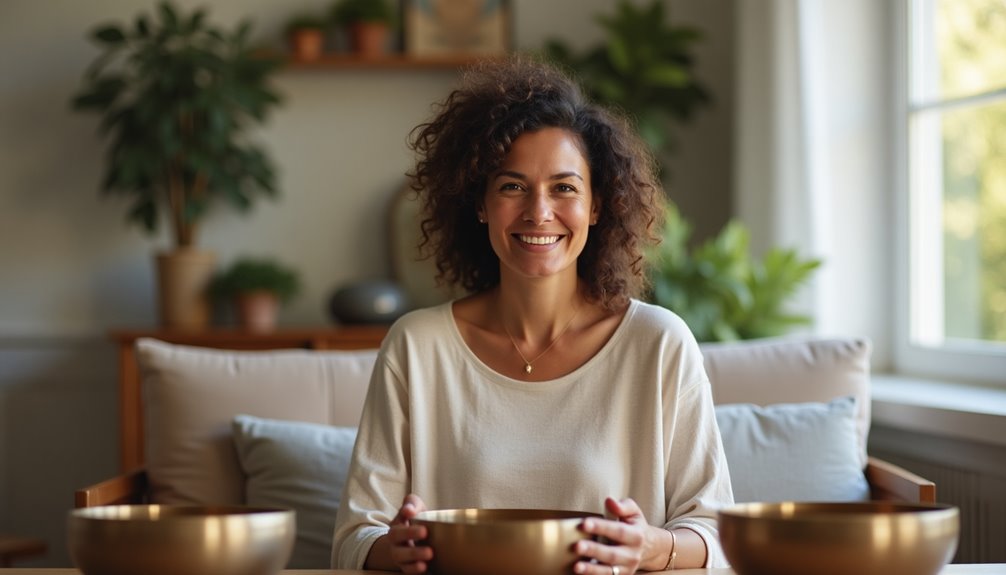
To create a mindful home, start by decluttering with purpose – think of it as conducting your own personal orchestra where every item plays its part. Let natural light flood in by keeping windows clear and using mirrors strategically. Choose colors that soothe your soul, like soft blues and earthy neutrals, while incorporating natural elements through plants and organic textures. Smart storage solutions will maintain the serenity you've crafted. This foundation sets the stage for transforming your space into a personal sanctuary.
Quick Highlights
- Declutter mindfully by keeping only items that serve a purpose and contribute to your authentic self and well-being.
- Maximize natural light and airflow through strategic furniture placement and unobstructed windows to create an uplifting atmosphere.
- Choose calming colors like soft blues, gentle greens, and earth tones to regulate the emotional temperature of your space.
- Incorporate natural elements through plants, wood furnishings, and organic textures to foster connection with the outdoors.
- Implement organized storage solutions using clear containers and dedicated zones to maintain visual calm and reduce mental clutter.
The Foundation of Mindful Design: Decluttering With Purpose
While many people view decluttering as simply tossing out old stuff, I've learned that mindful decluttering is more like conducting an orchestra – every piece needs to serve a purpose in the grand symphony of your home.
Think of it this way: you're not just clearing space; you're curating your life's story. Start by asking yourself, "Does this item bring harmony to my daily rhythm?"
I've discovered that when you approach decluttering mindfully, you'll find yourself naturally gravitating toward items that truly resonate with your authentic self (trust me, that novelty pasta maker collecting dust isn't one of them!).
Natural Light and Air Flow: Creating Breathing Space
Just as a forest canopy filters sunlight to nourish everything below, your home's relationship with natural light shapes the entire ecosystem of your living space.
When you position furniture to maximize daylight and create clear pathways for fresh air, you're not just decorating – you're crafting a living, breathing sanctuary.
Think of your windows as your home's lungs. By strategically arranging sheer curtains and keeping windowsills clutter-free, you'll transform stagnant corners into vibrant spaces.
I've found that even small tweaks – like angling a mirror to bounce light or placing plants near windows – can turn a dim room into an energizing retreat where you'll naturally want to linger.
Color Psychology for Inner Peace
As your eyes travel across a room's color palette, each shade triggers subtle but powerful emotional responses – whether you're conscious of them or not.
Think of color as your emotional thermostat, helping you regulate your home's psychological temperature.
You'll find serenity in soft blues (like a clear morning sky) and gentle greens (picture dewdrops on leaves).
Need to feel grounded? Earth tones are your best friends.
I've found that lavender works wonders in my meditation space, while warm whites create breathing room for busy minds.
Incorporating Nature: Bringing the Outdoors In
The relationship between color and nature forms a perfect partnership in mindful home design.
You'll find that bringing outdoor elements inside creates an instant connection to the natural world – something we're all craving these days! Try incorporating potted plants, natural wood furnishings, and stone accents throughout your space.
I've discovered that even small touches make a difference – that sprawling pothos on my bookshelf literally breathes life into my home office.
You can also embrace nature through natural light (those floor-to-ceiling windows are game-changers!), organic textures, and botanical prints.
The key is creating a space that feels like a revitalizing walk through your favorite park.
Mindful Furniture Arrangement and Flow
While furniture arrangement might seem like simple aesthetics, mindful placement transforms your entire living experience through intentional flow and energy.
Consider how you naturally move through spaces – that's your flow pattern, and it shouldn't feel like an obstacle course!
Position your furniture to create clear pathways (think of them as energy rivers) while establishing distinct zones for different activities.
You'll want your most-used items easily accessible. Place your favorite reading chair where natural light falls, and keep your dining area open and inviting.
Creating Sacred Spaces for Meditation and Reflection
Beyond mindful furniture flow lies an even more personal dimension of home design – creating your own sanctuary for inner peace.
Whether it's a cozy corner in your bedroom or a dedicated meditation room, this space should speak to your soul and invite daily moments of stillness.
- Choose a spot that's naturally quiet and receives gentle natural light – think morning sun filtering through sheer curtains.
- Layer soft textures like cushions, rugs, and throws that make you want to settle in and breathe deeply.
- Incorporate meaningful objects that ground you – perhaps a special crystal, family photo, or cherished travel memento.
The Role of Textures and Materials in Sensory Comfort
Living mindfully means engaging all your senses, and there's no better place to start than with the textures and materials that surround you at home.
You'll want to create a multi-sensory haven that soothes your soul and grounds you in the present moment.
Think soft, chunky knit throws that feel like a warm hug, smooth river stones that cool your palms, and natural wood surfaces that connect you to earth's wisdom.
Layer in organic cotton, wool, or linen textiles – they're not just pretty, they're breathing materials that respond to your touch.
(Trust me, there's something magical about running your fingers across a hand-loomed blanket after a long day!)
Mindful Storage Solutions for Daily Serenity
When your home lacks thoughtful storage solutions, even the most beautifully designed spaces can become sources of stress and mental clutter.
I've learned that mindful storage isn't just about hiding things away—it's about creating systems that bring peace to your daily routines and honor your belongings.
- Create "mindfulness zones" where everyday items have dedicated homes (think: a serene drawer for your meditation cushion or a sacred spot for your morning tea ritual)
- Use clear containers to maintain visual calm while keeping items accessible
- Design storage that reflects your values (sustainable materials, multi-functional pieces)
Balancing Technology and Tranquility in Modern Living
Although technology enriches our modern lives in countless ways, it often disrupts the sanctuary-like atmosphere we're trying to create at home.
You'll find peace by designating tech-free zones where your mind can truly unwind (your bedroom's a perfect start!).
Consider creating a charging station in your entryway, keeping devices out of sight but accessible.
I've found that replacing harsh notification sounds with gentle chimes makes a huge difference.
And here's a game-changer: smart lighting that automatically dims in the evening, signaling your brain it's time to decompress.
You don't have to choose between modern convenience and tranquility – it's all about mindful boundaries.
Final Thoughts
You're creating more than just a beautiful home – you're crafting a sanctuary where chaos meets calm, and busy meets peaceful. While mindful design requires intention and effort, it's worth every careful choice you make. Remember, your space reflects your inner world, so let it tell a story of tranquility. Whether you're decluttering countertops or arranging furniture with purpose, each mindful decision brings you closer to the serene haven you deserve.